When the Market Cools, the Trees Speak: How Mature Softscapes Give Ozark Properties a Serious Edge
There's a particular kind of silence that settles over a buyer's market. Listings linger. Price cuts stack up. Open houses thin out. And sellers who once felt confident start second-guessing everything — the kitchen counters, the roof age, the asking price.
But out here in the Ozarks, something interesting happens during those slow stretches. Properties with established landscapes — real, living, mature softscapes — tend to hold their ground. Sometimes they even pull ahead. It's not magic. It's biology, psychology, and a little bit of shrewd land stewardship working together.
What "Mature Softscape" Actually Means
Let's get specific, because "landscaping" is a word that gets stretched pretty thin in real estate listings. A row of freshly planted boxwoods does not a mature softscape make.
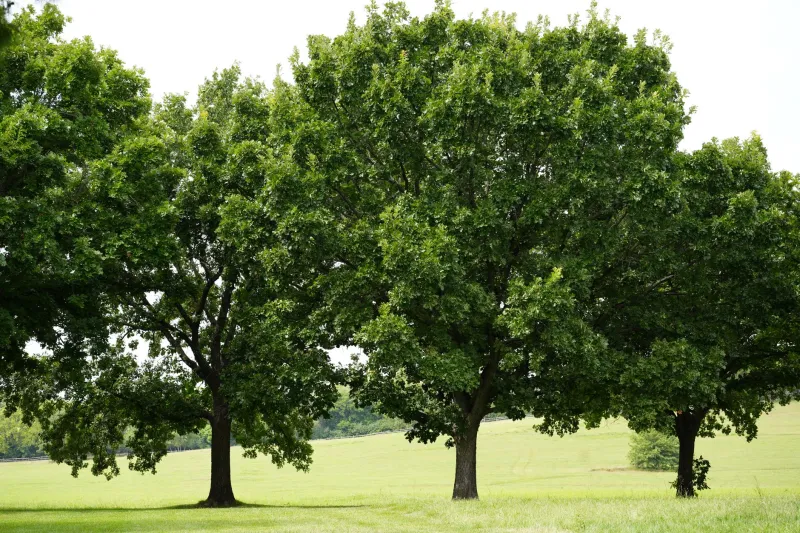
When we talk about mature softscapes in the Ozark context, we mean properties where the living elements have had time to establish — native oaks with real canopy spread, understory layers of redbud and serviceberry, ground cover that has knit itself into the soil, native grasses and wildflower meadows that cycle through the seasons without much human intervention. We're talking about root systems that have gone deep into Ozark limestone and clay, about trees that actually provide shade at 2 p.m. in July, about landscapes that have already done the hard work of becoming something.
That distinction matters enormously when buyers are being selective.
The Numbers Behind the Narrative
Real estate professionals working the Ozark corridor — from the Springfield metro south through the lakes region and into the Arkansas highlands — have noticed a consistent pattern. During the 2022–2024 cooling period, when inventory climbed and days-on-market stretched out regionally, properties with mature landscaping moved faster and retained more of their list price than comparable bare or minimally landscaped lots.
National data backs this up in broad strokes. The American Society of Landscape Architects has long cited studies suggesting that mature, well-designed landscapes can add anywhere from 5 to 15 percent to a home's appraised value. In the Ozarks specifically, where the natural environment is itself a major selling point, that premium can push even higher — particularly on rural acreage where buyers are explicitly paying for a relationship with the land.
One Springfield-area appraiser put it plainly in a conversation we had last spring: "When I'm pulling comps on a rural Ozark property, a mature tree canopy and established native plantings are line items. They're not decoration. They're infrastructure."
That framing — softscape as infrastructure — is worth sitting with for a moment.
What Buyers Are Actually Feeling (And Why It Matters)
Buyer psychology in a soft market is its own fascinating territory. When there's plenty of inventory and no urgency, buyers become more deliberate. They stop settling. They start holding out for properties that feel right, not just properties that check boxes.
And here's where mature softscapes do something that granite countertops simply cannot: they create an emotional response that's almost impossible to manufacture quickly.
A 40-year-old white oak throwing shade across a limestone patio tells a story. A stand of native pawpaws along a creek edge signals that this land has been cared for, that someone paid attention. Buyers — especially the demographic increasingly drawn to Ozark properties, which skews toward remote workers, retirees, and lifestyle-motivated relocators — respond to that story on a gut level.
They walk the property and they feel settled. They can picture themselves there. That psychological shortcut, from "interesting listing" to "this is our place," happens faster and more reliably on a property where the land itself has personality.
Strip that away, and you're asking buyers to do a lot of imaginative heavy lifting. In a buyer's market, many of them simply won't bother.
The Hardscape Trap
It's worth addressing a common mistake sellers make when trying to add value on a budget: defaulting to hardscape. Concrete pads, gravel drives, retaining walls — these are not bad investments, but they carry a specific liability in a slow market.
Hardscape ages visibly and often poorly. A cracked concrete pad or a retaining wall with drainage issues becomes a negotiating point, a liability, something buyers use to justify a lower offer. And unlike a mature oak, hardscape cannot grow more valuable with time. It depreciates.
Mature softscape, by contrast, appreciates. A landscape that was thoughtfully planted ten or fifteen years ago is worth more today than it was at installation. That trajectory is baked into the biology. Trees get bigger. Root systems get deeper. Canopy cover expands. The property becomes more itself with every passing season.
In a market where buyers have options, that upward trajectory is a meaningful differentiator.
The ROI Timeline You Need to Understand
Here's the honest part of the conversation: mature softscape doesn't happen overnight, and it can't be faked at listing time. You can't drop $8,000 on fast-growing shrubs in April and expect to capture a mature-landscape premium by July. Buyers who are paying attention — and in a soft market, they are — will see through it.
The real ROI from softscape investment operates on a 5-to-15-year horizon. Ozark landowners who planted native species a decade ago, who let their creek corridors develop naturally, who resisted the urge to mow everything to the fence line — those owners are sitting on a genuine asset right now.
For sellers who haven't done that work yet, the message isn't despair. It's prioritization. Even modest investments in the right living elements — a strategically placed native tree cluster, a wildflower buffer along a property edge, a creek bank allowed to naturalize — begin building that premium from day one. The sooner you start, the sooner the land starts working for you.
Selling in a Soft Market? Lead With the Living
If you're preparing an Ozark property for sale in a cooling market, the conversation with your agent and your listing strategy should start with what's alive on the land. Not the square footage. Not the garage bays. Not the HVAC system.
Document the softscape. Photograph it across seasons if you can. Know the names of what you've got — buyers increasingly want to know whether those trees are native species, whether the meadow is managed or wild, whether the creek corridor is healthy. That information is part of the value proposition.
And if your property is on the bare or hardscape-heavy end of the spectrum, be honest about what that means for your pricing position. You're asking buyers to invest time and money into a landscape that doesn't exist yet. In a market where patience is optional, that's a real ask.
The Ozarks have always rewarded people who work with the land rather than against it. Turns out, the real estate market rewards them too.