Your Land, Your Legacy: Crafting an Ozark Outdoor Space That Tells Your Story
There's a difference between a yard that looks nice and a landscape that means something. Walk through enough Ozark properties and you start to feel it—some outdoor spaces are clearly assembled from a catalog, everything coordinated and inoffensive. Others stop you cold. They feel inhabited. Lived in. Like the land itself has something to say about the people who shaped it.
That second kind of property doesn't happen by accident. It's the result of intentional choices, the kind that come from asking a different set of questions before the first plant goes in the ground.
Instead of starting with "What's trending in landscape design?" try asking: What matters to me? What do I want this land to remember?
Start With What You're Actually Bringing to the Land
Every homeowner arrives at a piece of Ozark ground with a history. Maybe you grew up fishing creek bottoms with your grandfather and the sound of moving water is woven into your earliest memories. Maybe you spent years in a city apartment dreaming of open space and now you want every inch of your property to feel expansive and free. Maybe your family has farmed this region for generations and you want the landscape to honor that continuity.
These aren't abstract feelings—they're design briefs waiting to be written.
A good landscape designer working in the Ozarks will tell you that the most successful projects begin with a conversation that has nothing to do with plants. It's about the client's story. Where they've been. What they value. What they want their grandchildren to feel when they visit twenty years from now.
That conversation is worth having with yourself before you ever pick up the phone.
Plant Palettes as Personal Expression
The plants you choose say a lot about who you are—and in the Ozarks, you have a genuinely rich vocabulary to draw from.
Someone drawn to the wild, unpredictable beauty of native ecosystems might lean into a naturalistic mix of wild bergamot, prairie dropseed, and native asters that bloom in succession from spring through frost. It's a palette that says: I'm paying attention to this land. I want to work with it, not over it.
A homeowner with deep roots in Ozark agricultural heritage might incorporate old-fashioned heirloom plants—persimmon, pawpaw, elderberry—that would have been familiar to their great-grandparents. These aren't just plants; they're living genealogy.
Someone who moved here from the Pacific Northwest might bring a love of bold texture and layered canopy, weaving native ferns and shade-tolerant understory trees into a design that echoes their former landscape while fully embracing Ozark species.
None of these approaches is more correct than the others. What matters is that the choices are conscious—that there's a thread of meaning running through them.
Water Features and the Weight of Memory
If there's one element that carries the most emotional freight in Ozark landscape design, it's water. This region is defined by its springs, creeks, and hollows, and the sound and sight of moving water touches something primal in most people who choose to live here.
The question isn't whether to incorporate water—it's how to make it personal.
A recirculating stream built from locally sourced limestone can evoke the creek you played in as a kid. A simple spring-fed pool, kept natural and unadorned, might reflect a commitment to ecological humility. A more formal reflecting pond surrounded by native sedges and iris could speak to someone who finds peace in stillness and symmetry.
Think about what water means to you specifically. Not what looks good in a magazine spread—what actually moves you. Then work backward from that feeling into a design.
Hardscape Materials as Regional Identity
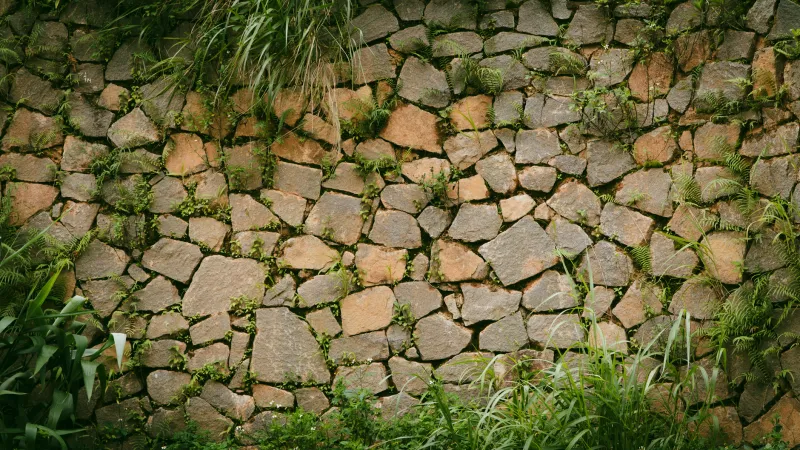
The Ozarks offer some of the most character-rich hardscape materials in the country. Locally quarried limestone, reclaimed barn wood, hand-split cedar, fieldstone pulled from the property itself—these materials carry a sense of place that no imported paver or big-box retaining block can replicate.
Choosing local materials isn't just an aesthetic decision. It's a statement about belonging. It says you're not trying to impose a foreign landscape onto this land—you're in conversation with it.
For some homeowners, this might mean building a fire pit ring from stones cleared during a creek crossing project, turning practical necessity into something beautiful and site-specific. For others, it could mean salvaging timber from a barn that stood on the property for a century and milling it into a pergola that carries that history forward.
These details might seem small, but they're exactly what makes a property feel rooted rather than installed.
Designing for How You Actually Live
Personal expression in landscape design isn't only about heritage and aesthetics—it's also about function. The way you use outdoor space says as much about you as any plant choice.
Do you host big family gatherings where kids need room to run and adults need a shaded spot to linger? That's a design program. Are you someone who wakes up early and wants a quiet corner to drink coffee and watch the light change over the ridge? That's a design program too. Do you keep chickens, grow a serious vegetable garden, need a place to store a tractor, or want a trail system that loops through your timber?
All of it belongs in the conversation. A landscape that looks beautiful but doesn't support the life you actually live will eventually feel wrong, no matter how well-designed it is on paper.
Keeping It Grounded in the Region
Here's the one place where personal expression needs a gentle check: the Ozarks have a character of their own, and the most successful personal landscapes work with that character rather than against it.
This doesn't mean every property has to look the same. It means that tropical plants in a Missouri hollow are always going to look like a mistake, no matter how much someone loves them. It means that a formal European garden style requires a lot of costly maintenance to survive Ozark summers and winters. It means that ignoring drainage, slope, and soil type in favor of a preconceived vision almost always ends in frustration.
The good news is that the Ozarks offer enough diversity—cedar glades, hardwood forests, open meadows, creek corridors, rocky outcrops—that almost any design sensibility can find its authentic expression here if you're willing to listen to the land first.
The Long View
One more thing worth considering: the landscape you build today will outlast your ownership of this property. Native plantings established now will be mature, valuable ecosystems in ten or twenty years. Thoughtful hardscape will weather into something beautiful. A design rooted in regional materials and plants will appreciate in ways that trendy installations simply won't.
Building a personal landscape isn't selfish—it's actually one of the most generous things you can do for a piece of Ozark land. You're giving it a story. You're giving the next owner something to inherit rather than rip out.
That's not a small thing. In a region as ecologically and culturally rich as the Ozarks, it might be exactly the point.