What Living Soil Is Actually Worth: The Real Premium Buyers Pay for Established Ozark Landscapes
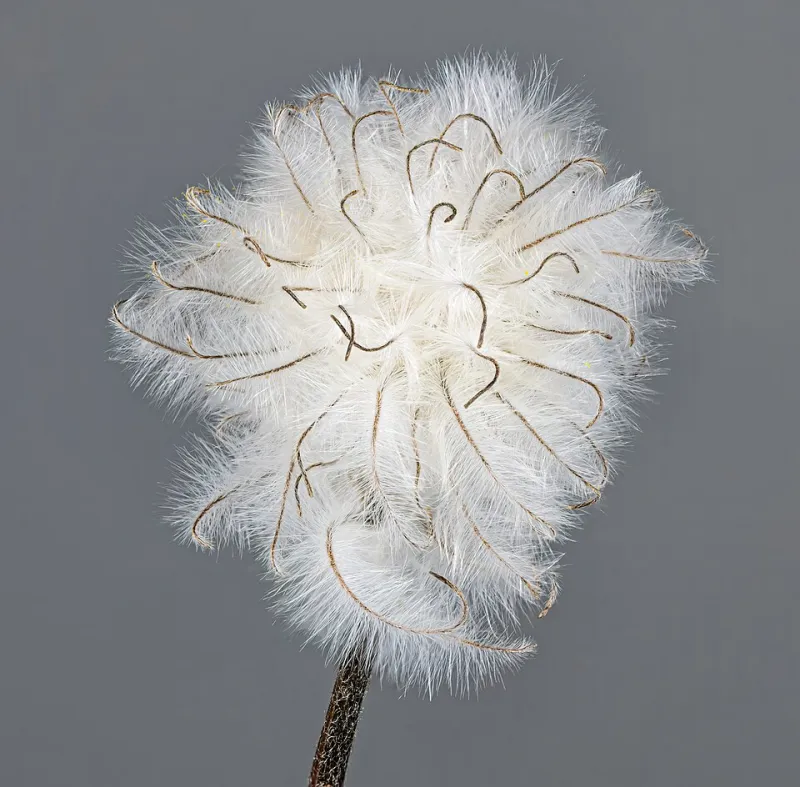
Photo: Didier Descouens, CC BY-SA 4.0, via Wikimedia Commons
There's a moment that happens on a lot of Ozark property tours. The buyer pulls up the gravel drive, steps out of the car, and just... stops. Not because of the roofline or the square footage. Because something about the land itself feels alive. The canopy is doing something interesting overhead. There's a layered bed of native shrubs running along the fence line. The soil underfoot has that dark, spongy quality that tells you it's been tended for years.
Real estate agents around the region will tell you that moment is worth money — real, quantifiable money at the closing table. But until recently, it was hard to put exact numbers to it. That's starting to change.
The Appraisal Gap Nobody Was Talking About
For a long time, softscaping — the living, plant-based elements of a landscape — got treated as a decorative afterthought in property valuations. Appraisers focused on structure, square footage, mechanical systems. A yard full of mature native plantings and a yard full of compacted bare dirt got treated roughly the same on the comparable sales sheet.
But that's shifting. Appraisers working in markets like Fayetteville, Bentonville, and the lake communities around Table Rock and Bull Shoals are increasingly factoring in landscape condition as a meaningful value driver — particularly when established softscaping is present.
"I've started treating a well-developed native landscape almost like a finished basement," says one northwest Arkansas appraiser who's been working residential properties in the Ozarks for over fifteen years. "It represents real invested value, it has functional utility, and buyers are clearly paying for it. I can't just ignore that in my comps."
The numbers he's seen suggest a premium ranging from roughly 7 to 15 percent on comparable properties — with the higher end showing up when the softscaping is mature, ecologically coherent, and low-maintenance by design.
Why Buyers Respond Differently to Living Soil
The psychological component here is worth understanding, because it's not purely rational. Buyers don't walk up to a property with a spreadsheet. They feel something first, and then they justify it with logic afterward.
A bare lot — even a clean, graded one — communicates work. It says: this is a blank slate, which sounds appealing in theory, but in practice means months or years of expense, effort, and uncertainty before the outdoor space becomes livable. Buyers mentally subtract for that. They're not just pricing the land; they're pricing the future labor.
An established softscape tells the opposite story. It says: someone already did the hard part. The soil biology is intact. The root systems are deep. The plants have proven they can survive Ozark summers and ice storms and deer pressure. There's a track record.
"We looked at probably twenty properties before we found ours," says a buyer who recently closed on a five-acre parcel near Eureka Springs. "Most of them had either nothing growing or just a bunch of random stuff thrown in. The one we bought had this whole established woodland edge — redbuds, native ferns, wild ginger, a little creek buffer planted with sedges. It felt like the land had already been loved. We paid more for it than we planned to, and we don't regret it for a second."
That phrase — the land had already been loved — comes up more than you'd expect in buyer conversations. It's not just aesthetics. It's trust. A mature landscape is evidence of stewardship, and stewardship signals that the rest of the property was probably cared for too.
The Maintenance Math That Changes the Conversation
There's also a very practical calculus at work. Conventional landscaping — think irrigated turf, annual color beds, trimmed boxwoods — looks neat on a listing photo but carries ongoing cost. Irrigation systems need maintenance. Turf needs mowing, fertilizing, and often chemical input to survive Ozark summers. Annual plantings have to be replaced every season.
Native softscaping, once established, largely takes care of itself. Deep-rooted prairie species don't need irrigation after year two or three. Native groundcovers outcompete weeds without herbicides. Properly selected shrubs and understory trees grow into their space without constant pruning.
Savvy buyers — particularly the wave of remote workers and early retirees who've been relocating to the Ozarks over the past several years — are doing this math before they make an offer. They're not just buying a property; they're buying a lifestyle, and they're acutely aware of how much time and money conventional landscaping can quietly consume.
"The people moving here from bigger metros often have a really clear-eyed view of operating costs," notes a buyer's agent based out of Bentonville. "They've dealt with HOA-mandated lawn maintenance and $300-a-month irrigation bills. When they see a property where the outdoor space is genuinely self-sustaining, that registers as a real financial benefit, not just a nice-to-have."
What 'Established' Actually Means in Ozark Terms
It's worth being specific about what buyers and appraisers are responding to, because not all planted landscapes are created equal. A few flats of nursery annuals and some fresh mulch don't move the needle the same way that a three-year-old native meadow or a properly planted riparian buffer does.
What commands a premium in Ozark markets tends to share a few characteristics:
Ecological layering. Properties where the landscape has distinct canopy, shrub, and groundcover layers feel complete and intentional. They also function better — providing habitat, managing stormwater, and creating genuine outdoor rooms.
Species that belong here. Eastern red cedar, Arkansas bluestar, native sumac, wild bergamot, pawpaw — plants that are indigenous to the Ozark bioregion communicate authenticity. They also tend to be far more resilient than imported ornamentals, which matters to buyers who've watched drought take out a neighbor's conventional landscape.
Visible age. Mature specimens — a redbud with real trunk diameter, a stand of native grasses that's clearly been there for years — convey permanence. They can't be faked with a quick pre-listing install, and buyers sense that.
Low intervention design. Landscapes that look cared for but not controlled read as sustainable. Buyers aren't looking for the maintenance burden of a formal garden; they want something that thrives without constant babysitting.
The Listing Advantage You Can't Photograph Enough
For sellers and developers, the takeaway is straightforward: softscaping isn't just a curb appeal upgrade. It's a value-creation strategy with a measurable return. Properties that hit the market with established native landscapes are spending fewer days listed, attracting more competitive offers, and closing at prices that reflect the true cost of what it takes to build that kind of outdoor environment from scratch.
The Ozarks has always had an inherent advantage here — the native plant palette is extraordinary, the terrain is dramatic, and the region's ecology rewards thoughtful softscaping in ways that flat, featureless suburban markets simply can't match. The buyers who are finding their way to this corner of the country increasingly understand that, and they're willing to pay for land that reflects it.
Living soil isn't a luxury. In a competitive Ozark market, it's increasingly looking like the baseline for a property that holds its value and earns its premium.