Built on Bedrock: How Ozark Limestone Turns Raw Land Into Extraordinary Outdoor Spaces
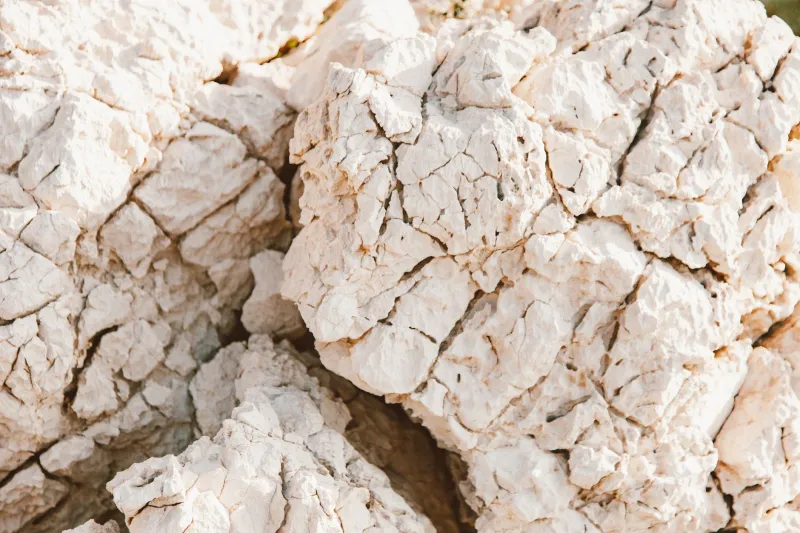
There's a moment that happens on nearly every Ozark property walk. You're moving through the tree line, maybe following a gentle slope toward a creek, and suddenly the ground just opens up — a shelf of pale gray limestone pushes through the hillside like something the land decided to show off. Most people stop and stare. The smart ones start designing.
The Ozarks sit atop one of the most geologically interesting landscapes in the American interior. Hundreds of millions of years of limestone deposition, uplift, and erosion have left behind a terrain that's simultaneously challenging and spectacular. Karst topography, exposed bluff faces, natural rock outcroppings, and shallow bedrock aren't obstacles here — they're the raw material for outdoor living spaces that would cost a fortune to manufacture anywhere else.
If you own Ozark land, you may already be sitting on a design advantage that most homeowners in other parts of the country would pay dearly to recreate.
What Makes Ozark Limestone Different
Not all stone is created equal, and Ozark limestone has a personality all its own. It tends to weather in flat, layered formations that stack naturally — which means it lends itself beautifully to terracing, retaining walls, and step construction without a lot of cutting or shaping. The color palette runs from warm cream to cool dove gray, with occasional buff and tan tones that photograph beautifully and age even better.
Because the stone is already on-site in many cases, you're not importing material from a quarry three states away. That changes the economics of a project significantly. Local landscape contractors who work regularly in the Ozarks know how to source, move, and place native stone efficiently — and the result almost always looks more cohesive than anything you'd get from a pallet of manufactured pavers.
There's also a durability argument. Limestone that's been sitting in an Ozark hillside for a few thousand years has already proven it can handle Missouri winters and Arkansas summers. It's not going to crack, fade, or deteriorate the way some imported materials do.
Karst Topography as a Design Feature
Karst landscapes — the kind shaped by water slowly dissolving soluble rock over time — create some of the most visually dramatic terrain in the region. Sinkholes, natural depressions, shallow caves, and spring-fed seeps are all karst signatures, and while they present real engineering considerations, they also offer design opportunities that flat-lot suburban builders simply don't have access to.
A natural depression on a karst property, properly graded and lined, can become a rain garden or a small pond feature that looks like it's always been there — because in a sense, the land already wanted to hold water in that spot. A spring seep along a hillside can anchor a naturalistic water feature without any pump infrastructure, letting gravity and geology do the heavy lifting.
That said, karst terrain demands respect. Building directly over solution cavities or near active sinkhole areas requires a geotechnical assessment before any serious hardscaping begins. This isn't something to skip in the name of saving a few thousand dollars on the front end. A qualified engineer familiar with Ozark geology can identify where the land is stable and where you need to work around rather than through.
Retaining Walls That Actually Belong Here
One of the most common challenges on Ozark properties is slope management. The terrain rolls, drops, and terraces in ways that make flat usable space a premium. The conventional solution in other regions is poured concrete or manufactured retaining block — functional, sure, but visually disconnected from the surrounding landscape.
The Ozark approach is different. Native dry-stack limestone walls built into a hillside don't just hold the grade — they become a feature. They create planting pockets for native ferns, columbine, and wild ginger. They develop a patina over time that manufactured materials simply can't replicate. And because they're built from material that belongs in this landscape, they tend to look intentional rather than imposed.
For taller walls or steeper grades, mortared construction with an engineered footing is the responsible route. But even then, using locally sourced limestone keeps the aesthetic grounded in the place.
Water Features That Work With the Geology
The Ozarks are spring country. Hundreds of springs dot the region, and even properties without active springs often have seasonal wet-weather flows that landscape designers can work with creatively. Limestone's natural tendency to channel and filter water makes it an ideal material for constructed stream beds, cascade features, and pond edges.
A recirculating water feature built from on-site stone costs a fraction of what an imported flagstone or manufactured boulder installation would run — and the visual result is almost always superior. The stone fits together the way it wants to, not the way a catalog says it should.
For buyers evaluating Ozark properties, a well-executed water feature built from native stone is often a genuine value-add at appraisal time. It signals that someone understood the land and worked with it rather than against it.
The Practical Side of Building on Bedrock
Here's the honest part: shallow bedrock creates real challenges for conventional construction. Footings, utility trenches, and drainage systems all get more complicated when you hit rock two feet down. Contractors who aren't familiar with the region sometimes underbid projects and then hit stone, which changes the timeline and the budget.
The workaround isn't to fight the geology — it's to design around it. Grade-level patios and terraces that sit on compacted gravel base rather than deep footings work beautifully on rocky sites. Raised planting beds built up from the bedrock surface let you add soil depth where the land doesn't offer it naturally. Outdoor structures like pergolas and pavilions can be anchored with surface-mount hardware into drilled and epoxied anchors rather than poured footings.
None of this is exotic — it's just Ozark-specific problem solving that experienced local designers have been doing for years.
What Buyers Actually Pay For
In the current Ozark real estate market, outdoor living spaces are doing real work at closing. Properties with thoughtfully integrated stone features — natural outcroppings preserved and highlighted rather than bulldozed, dry-stack walls framing usable terraces, native stone patios that feel like they grew out of the hillside — consistently generate stronger buyer interest than comparable properties with generic landscaping.
Part of this is aesthetic. Limestone features photograph well and create the kind of visual identity that makes a listing stand out in a scroll. But part of it is also the increasingly widespread understanding among buyers that good native stone work is expensive to replicate. When it's already there, done well, it carries real value.
The Ozarks hand their property owners something that money genuinely can't buy in most of the country: a geological foundation with built-in design character. The question isn't whether your land has something to work with. It's whether you're working with it.