Linking the Land: How Your Ozark Property Can Become Part of Something Much Bigger
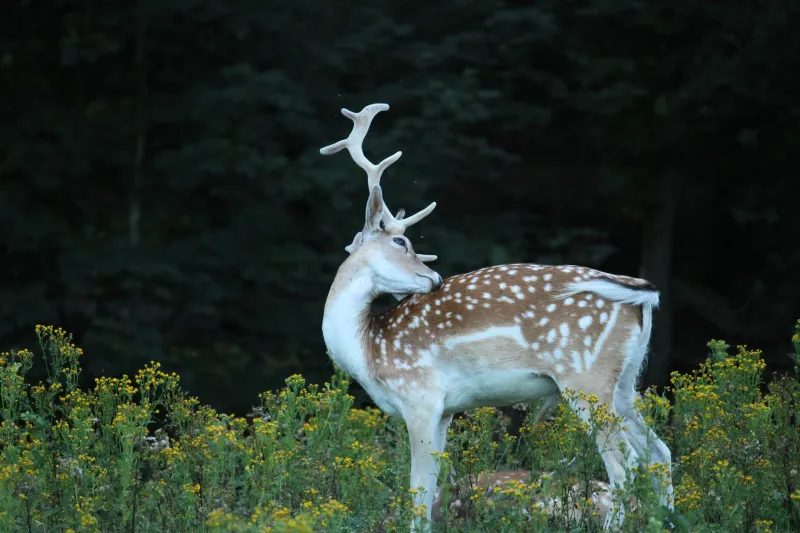
Here's something most people don't think about when they're sketching out a landscape plan: the animals that will use it don't read property surveys. A box turtle crossing your back meadow has no idea where your lot ends and your neighbor's begins. A migrating wood thrush moving through the Ozarks in October is just following whatever path of food and cover keeps showing up.
That's the whole idea behind wildlife corridors—and it turns out that individual landowners in the Ozarks are sitting on some serious potential to make them work better. Whether you've got five acres or fifty, what you plant, where you plant it, and how you manage the spaces in between can either help regional wildlife move freely or quietly shut them out. The good news is that the design choices that support movement also tend to make properties more beautiful, more ecologically resilient, and—not incidentally—more attractive to a growing segment of buyers who care deeply about land stewardship.
What a Wildlife Corridor Actually Is (And Why the Ozarks Are Already Wired for Them)
A wildlife corridor is essentially a connected strip or network of habitat that allows animals to travel between larger patches of land—forests, wetlands, open meadows—without having to cross through hostile terrain like parking lots or bare lawns. The Ozarks are unusually well-suited to this concept. The region's ridgelines, creek hollows, and intact forest patches already form a loose but functional web of habitat across Missouri and Arkansas. What breaks that web apart is fragmentation: roads, developed lots, mowed turf, and landscapes stripped of the native plants that wildlife depend on.
When you design your property with corridor thinking in mind, you're not just making a nice yard. You're stitching a gap back together.
The Plantings That Do the Heavy Lifting
Not all native plants are created equal when it comes to supporting wildlife movement. Some are generalists that offer broad value; others are highly specific to the needs of particular species. For Ozark properties, a few categories stand out.
Understory trees and shrubs are probably the most important single investment. Serviceberry, native viburnums, pawpaw, and wild plum create layered cover that mimics natural forest edges—the zones where wildlife feels safe enough to move through. These plants also produce fruit and berries that fuel migrating birds and mammals during their most energy-intensive journeys.
Bunch grasses and native meadow mixes serve a different but equally critical role. Little bluestem, sideoats grama, and Indian grass provide nesting cover for ground-dwelling birds and small mammals, while their seed heads feed everything from goldfinches to wild turkeys well into winter. A well-designed meadow patch doesn't just look good from October through February—it's actively feeding the corridor.
Mast-producing trees—oaks especially—are long-game investments that pay ecological dividends for generations. White oak, chinkapin oak, and bur oak are native to much of the Ozark region and produce the acorns that deer, turkeys, squirrels, and wood ducks rely on during fall migration and winter survival. If your property has existing oaks, protecting and enhancing around them is one of the highest-value moves you can make.
Water Is the Multiplier
If native plantings are the corridors themselves, water features are the rest stops. Even a modest seasonal pond, a naturalized rain garden, or a shallow rock-lined seep can dramatically increase the number and diversity of species moving through your land.
For corridor purposes, the best water features share a few traits: they're accessible from multiple directions (not surrounded by steep banks or dense shrubs that block approach), they offer shallow areas suitable for wading birds and amphibians, and they're positioned near existing cover so animals don't have to cross open ground to reach them. A pond with a naturalized edge planted in native sedges, rushes, and cardinal flower does far more ecological work than a concrete-edged water feature with ornamental plantings.
If your property has a natural drainage feature—a seasonal creek, a wet weather spring, a low-lying boggy area—you're already ahead. These are the natural corridors that wildlife have been using for centuries. Working with them rather than against them is almost always the smarter design choice.
Open Space Isn't Wasted Space
One of the harder sells in landscape design is convincing people that unmanaged or lightly managed open space is a feature, not a flaw. But for wildlife movement, transitional zones between forest and meadow—what ecologists call ecotones—are some of the most productive habitat on the planet. A brushy fencerow, a weedy field margin, a patch of blackberry thicket: these are exactly the kinds of spaces that allow animals to move, hide, and forage.
This doesn't mean letting your whole property go wild. It means being intentional about where you maintain manicured spaces and where you allow a little productive messiness. Even a 20-foot buffer of native shrubs along a fence line or property edge can function as a meaningful connector in the larger landscape.
The Stewardship Premium Is Real
Here's where this gets interesting from a real estate standpoint. The buyer pool for Ozark properties has shifted noticeably over the past decade. Remote workers, conservation-minded retirees, and younger buyers with strong environmental values are increasingly drawn to properties that demonstrate active land stewardship. A landscape designed with corridor thinking—native plantings, functional water, managed open space—signals something specific to these buyers: this land has been cared for with intention.
That's not just a soft value. Properties with established native landscapes, wildlife-friendly design features, and documented ecological connectivity are increasingly commanding attention from land trusts, conservation easement programs, and buyers willing to pay a premium for land that's doing more than just sitting there. In some cases, corridor-connected properties have qualified for conservation incentive programs that provide both financial benefits and long-term land protection.
Even outside formal programs, the visual and experiential quality of a well-connected landscape is hard to fake. When a buyer walks a property and flushes a covey of quail, watches a great blue heron work a naturalized pond, or spots a fox moving through a meadow edge at dusk, they're experiencing something that a conventional landscape simply can't offer. That experience has value—and buyers know it.
Starting Where You Are
You don't need to overhaul your entire property to start thinking and designing like a corridor. Start with the edges. Look at where your land meets your neighbors', where it borders a road or a creek, where the natural transition zones already exist. Those are your starting points.
Then ask a simple question: what would make it easier for something to move through here? Sometimes the answer is as straightforward as planting a row of native shrubs along a fence line, letting a mowed strip go to native grass, or adding a small water feature near existing tree cover. Small moves, compounded over time, add up to something genuinely significant—both for the wildlife using your land and for the story your property tells.
The Ozarks have always been a landscape in motion. Rivers carving new channels, forests slowly reclaiming old fields, animals following ancient routes through the hills. When your landscape design works with that motion instead of against it, you're not just building a beautiful outdoor space. You're becoming part of something that was here long before you arrived—and will be here long after.