Hush Money: How the Right Plants Can Silence Noise and Boost Your Ozark Property's Appeal
You finally found your slice of the Ozarks. Rolling terrain, a creek maybe, big sky overhead. But then you step outside on a Saturday morning and hear the highway. Or the neighbor's ATV. Or the gravel trucks grinding past at 6 a.m. Suddenly the dream has a soundtrack you didn't sign up for.
Here's what most people don't know: plants fix this. Not perfectly, not instantly — but strategically placed native softscape can reduce perceived noise levels dramatically, turning a loud property into something that genuinely feels like a retreat. And in today's Ozark real estate market, that kind of quiet is worth real money.
Why Sound Behaves Differently Out Here
The Ozarks aren't flat, and that matters acoustically. Sound waves bounce off bluffs, travel along hollows, and get funneled by terrain in ways that can make a highway a mile away feel like it's right next to your back porch. Meanwhile, cleared land offers zero resistance — noise moves freely across open ground.
Dense vegetation changes the equation. Plant material absorbs sound through its mass, deflects it through irregular surfaces, and — maybe most importantly — introduces competing natural sounds that psychologically mask mechanical noise. The rustle of leaves, birdsong, water moving over rocks. Your brain stops fixating on the bad sounds when the good ones are present and layered.
The science backs this up. Studies on vegetative sound barriers consistently show that thick, multi-story plantings can reduce noise by anywhere from 5 to 15 decibels depending on depth, density, and species selection. That might not sound like much in raw numbers, but a 10-decibel reduction is perceived by the human ear as cutting the noise roughly in half.
The Layering Principle: Why One Row of Trees Won't Cut It
This is where most DIY attempts fall short. People plant a single row of Eastern Red Cedars along a property line and wonder why they can still hear everything. The truth is that acoustic buffering requires depth — multiple layers of vegetation at different heights working together.
Think of it as building a wall, except the wall is alive and three-dimensional. A proper acoustic softscape buffer in the Ozarks typically works in three tiers:
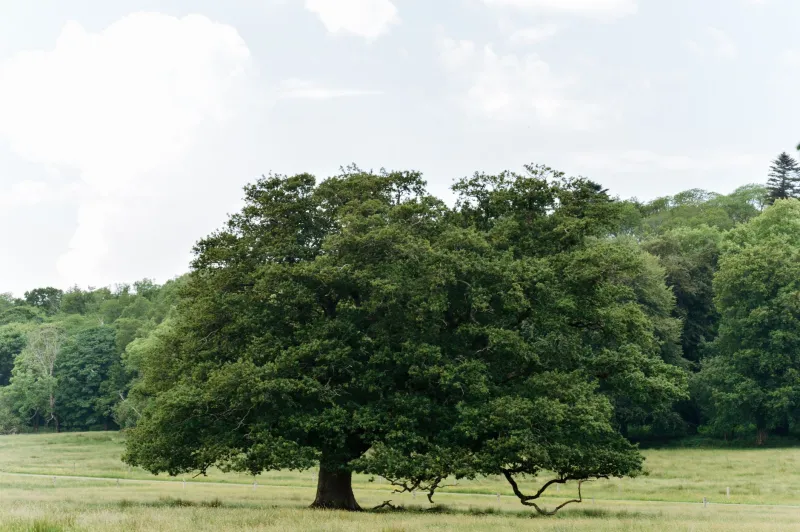
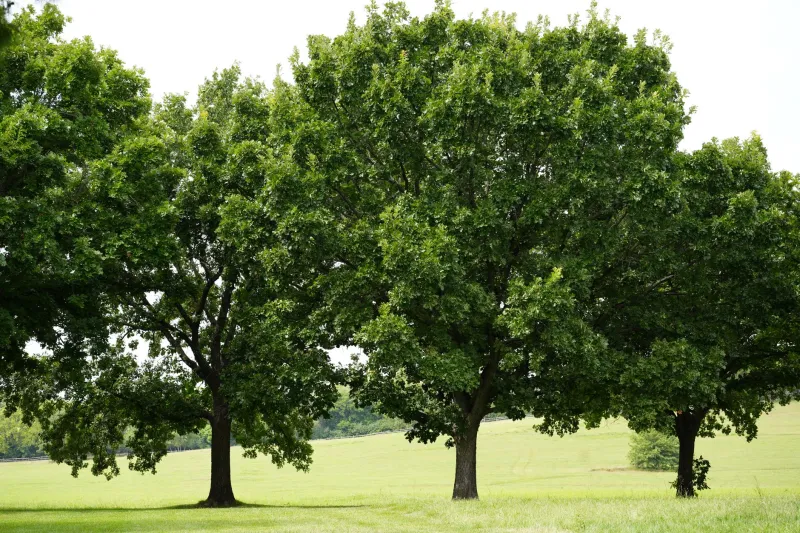
The outer canopy layer intercepts and deflects sound at elevation. Native hardwoods like Shumard Oak, Bur Oak, or Chinkapin Oak do this work well. They're also long-lived and drought-tolerant once established, which matters in Ozark summers.
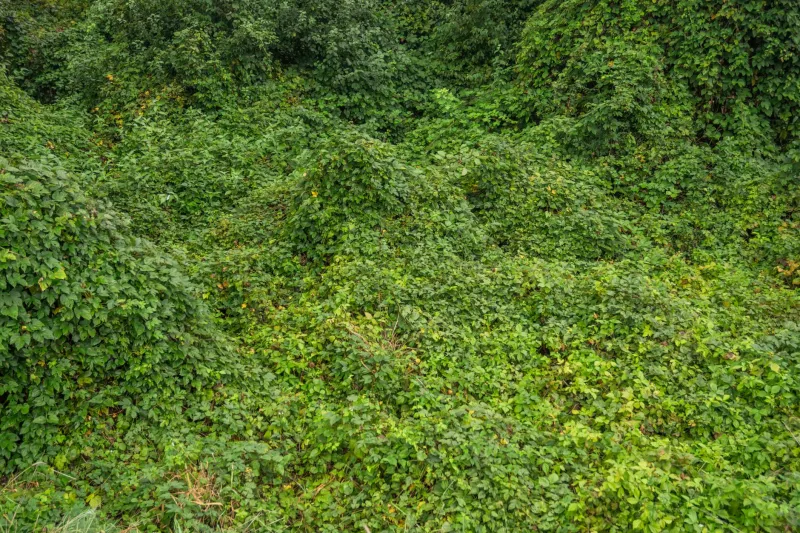
The mid-story shrub layer is where the real absorption happens. This is the dense, tangled zone that sound waves struggle to penetrate. Native choices like Roughleaf Dogwood, American Beautyberry, and Buttonbush pack tightly and provide year-round mass — especially important in winter when deciduous trees drop their leaves and noise tends to return.
The groundcover and low shrub layer fills in the gaps at ground level, preventing sound from sneaking underneath the upper plantings. Wild Ginger, native ferns, and low-growing viburnum species all work here. This layer also does double duty for erosion control on sloped Ozark terrain.
The total depth of your buffer matters more than the height of any individual plant. A planting zone that's 20 to 30 feet deep will outperform a taller but thinner row every single time.
Species That Earn Their Keep in Ozark Conditions
Not every plant that works acoustically will survive Ozark summers, rocky soils, or the region's dramatic freeze-thaw cycles. Here are some that do both jobs well:
- Eastern Red Cedar (Juniperus virginiana): The Ozark workhorse. Dense, evergreen, and tolerant of almost everything. Plant these in clusters rather than rows for better sound diffusion.
- Roughleaf Dogwood (Cornus drummondii): A native shrub that spreads aggressively and fills mid-story gaps fast. Birds love it, noise hates it.
- Possumhaw Holly (Ilex decidua): Keeps its berries through winter, providing both visual interest and acoustic mass during the bare months.
- Shumard Oak (Quercus shumardii): Fast-growing for an oak, and eventually massive. A long-term investment in both shade and sound control.
- American Elderberry (Sambucus canadensis): Quick-establishing, multi-stemmed, and useful for filling in new buffers while slower species mature.
- Switchgrass (Panicum virgatum): Don't overlook native grasses. A thick stand of switchgrass rattles and rustles constantly in Ozark breezes, creating exactly the kind of ambient sound masking that makes a space feel quieter.
Topography as Your Partner
The Ozarks hand you something most flat-state landowners would pay dearly for: natural grade changes. A berm — even a modest one — dramatically improves the performance of any acoustic planting. Mounding soil two to three feet before planting your buffer effectively raises your vegetation without waiting years for trees to grow. Combined with dense native plantings, a bermed softscape buffer along a road or property boundary can deliver results that would take twice as long on flat ground.
If you're working with existing terrain, lean into it. A hollow or depression between your outdoor living area and a noise source is a natural ally. Dense plantings on the uphill side of that low point can trap and absorb sound before it ever reaches your patio.
What Buyers Are Actually Paying For
Real estate professionals in the Ozark region increasingly hear buyers mention "privacy" and "quiet" in the same breath as acreage and water features. A property that delivers genuine acoustic separation — where you can sit on the back porch and not hear the road — commands a premium that's hard to quantify on a spec sheet but very real at the negotiating table.
More than that, acoustic softscaping creates the lived experience that makes a property memorable. Buyers who tour a home and feel genuinely relaxed in the outdoor space are more emotionally connected to it. That emotional connection translates to offers, and often to fewer days on market.
The investment in a proper native planting buffer is real but not dramatic. Established native species are relatively affordable, especially when sourced from regional nurseries familiar with Ozark conditions. The labor and soil prep are the bigger costs — and those pay dividends for decades.
Starting the Quiet
If you're sitting on a noisy property right now, the worst move is to wait. Native plantings take time to establish, and every year you delay is a year your outdoor space stays loud. Even a modest first-year planting — some Eastern Red Cedars along the noisiest exposure, a cluster of native shrubs near the patio — starts changing the acoustic character of the space almost immediately.
The Ozarks are genuinely one of the quieter corners of the American landscape. The goal with thoughtful softscape design is to make sure your property actually sounds like it belongs here.